
 EN
EN Romanian
 The Art of Bespoke Tailoring
A bespoke suit is created for one person, from an individual pattern developed around measurements, posture, proportions and personal preferences.
This guide explains how bespoke tailoring differs from Made to Measure, how a suit is developed from the first bespoke appointment to the final fitting, and how details such as fabric, lapels, pockets, buttons and trousers influence the finished garment.
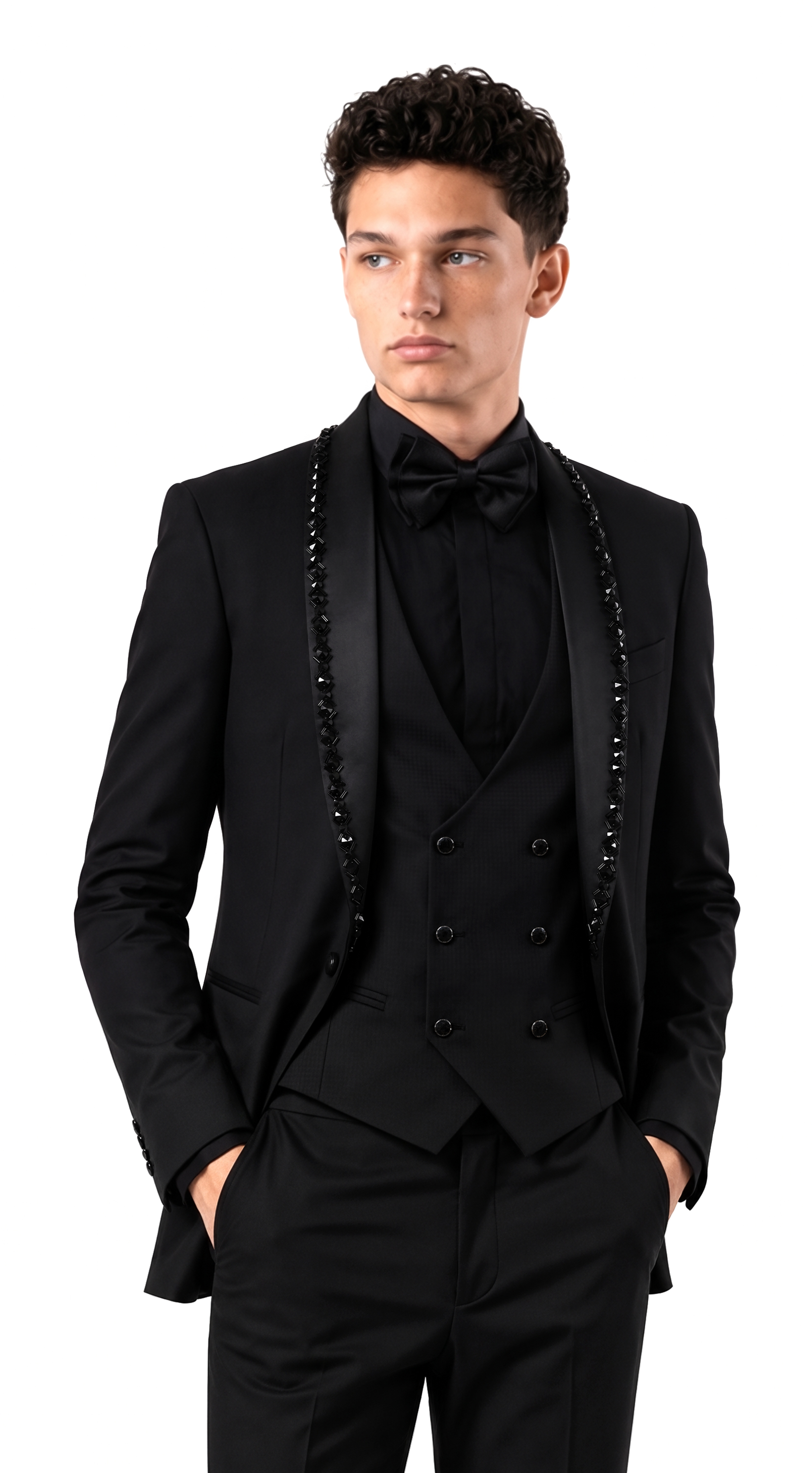
What is a bespoke suit?
Bespoke tailoring starts with the individual rather than a predefined size. Measurements are only one part of the process: posture, shoulder line, chest, waist, balance and body asymmetries are also considered when the pattern and garment are developed.
At Filip Cezar, the tailoring process is built around an individual configuration of the suit, from fabric and construction to lapels, pockets, buttons, lining and decorative details. The Romanian atelier presentation describes a process involving experienced tailors, numerous production stages and extensive handwork before the garment reaches its final form.
The result is a garment designed to sit correctly on the wearer while preserving comfort and freedom of movement. This is particularly important for business suits, wedding suits and formal ceremony pieces, where proportions and balance are immediately visible.
Bespoke vs Made to Measure vs Ready to Wear
Bespoke
An individual pattern is developed for the client and refined through fittings. Proportions and details can be configured as part of one complete design.
Made to Measure
An existing base pattern or block is adjusted to the customer’s measurements. It offers more flexibility than a standard size, but it is not the same construction process as bespoke.
Ready to Wear
The suit is produced in standard sizes. Alterations can improve the fit, but the original proportions and construction were not created for one specific wearer.
How a bespoke suit is made
Fabric, construction and the character of the suit
Fabric should be chosen according to how and where the suit will be worn. Wool remains one of the most versatile choices because it can be woven in different weights and finishes for business, evening and ceremony garments. Linen and wool-linen blends are particularly useful for warmer conditions, while velvet can create a richer evening effect.
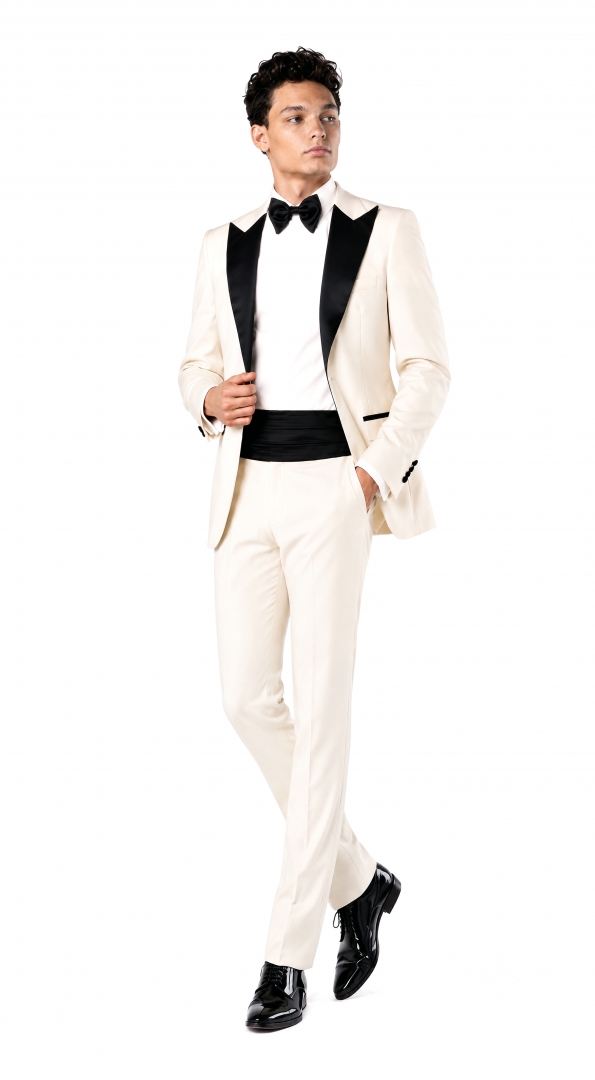
The colour and surface of the cloth also influence formality. Navy, charcoal and darker tones are highly versatile; ivory, black, deep green, burgundy and textured fabrics can create a stronger ceremony statement when the design is balanced correctly.
Construction matters as much as the cloth. A well-proportioned jacket should maintain a clean line through the shoulders and chest while allowing the wearer to move naturally.
The jacket: single-breasted or double-breasted?
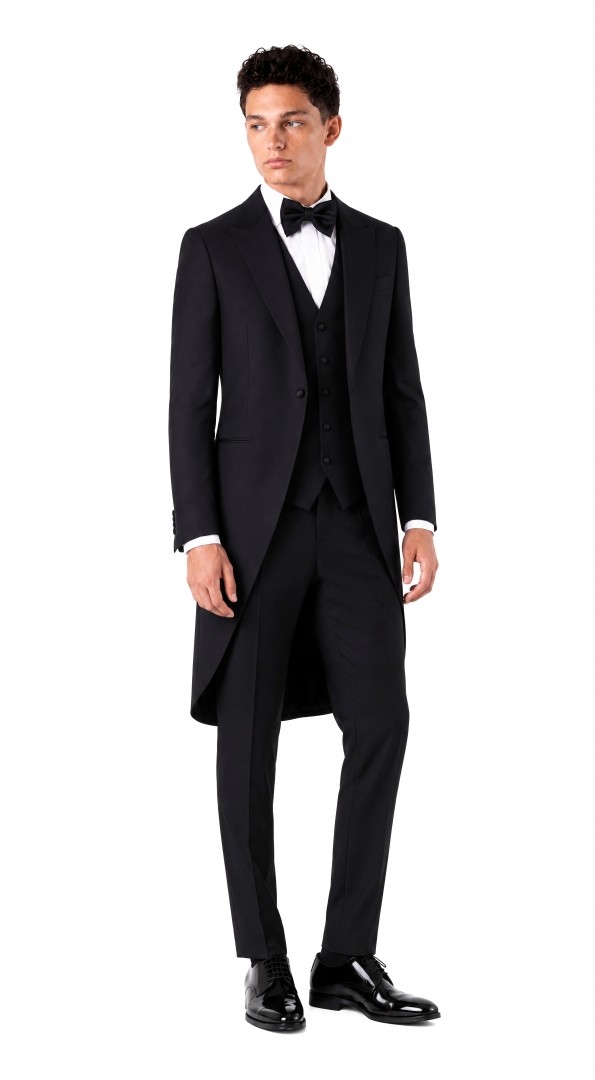
A single-breasted jacket has one column of buttons and is one of the most adaptable suit configurations. Depending on the lapel, fabric and styling, it can move easily from business to formal ceremony.
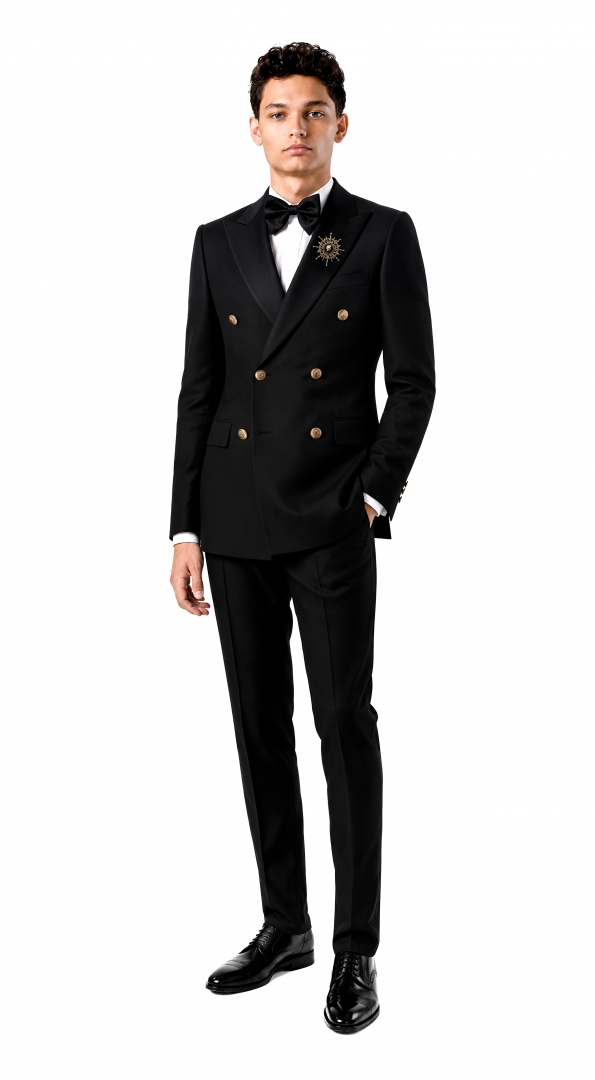
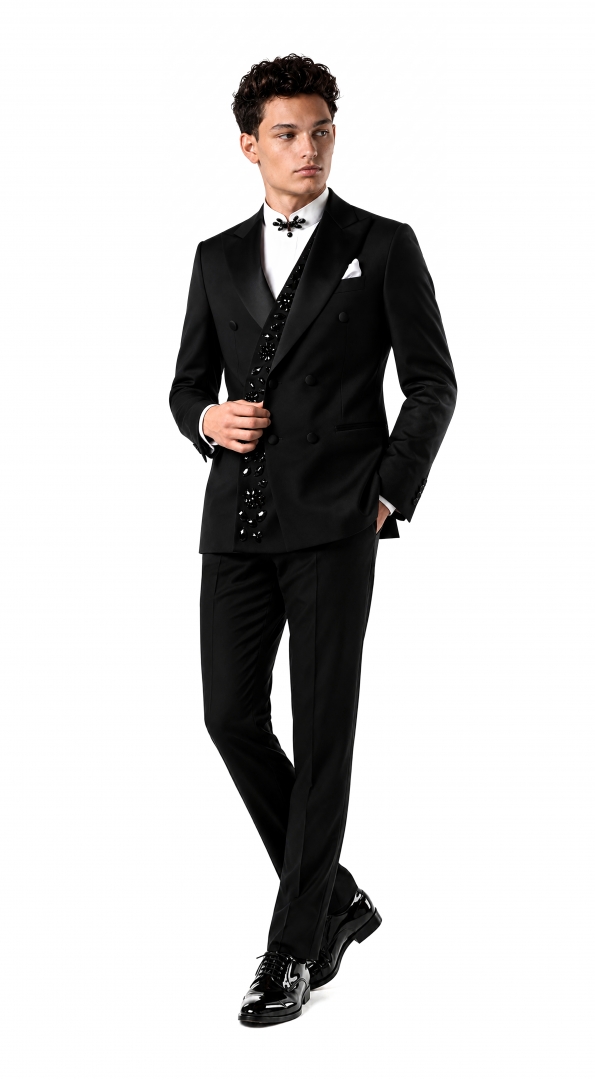
A double-breasted jacket has two button columns and a wider overlap at the front. Its stronger architecture gives it more visual presence, which makes proportion especially important.
With bespoke tailoring, button position, jacket length, waist suppression and lapel width can be coordinated to create a more balanced silhouette instead of relying on the fixed proportions of a standard-size garment.
Jacket buttons
Single-breasted jackets may use one, two or three buttons depending on style and proportion. Double-breasted jackets are commonly configured with four or six visible buttons, while an internal support button can help stabilise the front overlap.
Notch, peak or shawl lapels?
Lapels strongly influence the visual proportion of a jacket. Their width should relate to the shoulders, chest, jacket length and the character of the outfit rather than being chosen only according to fashion trends.
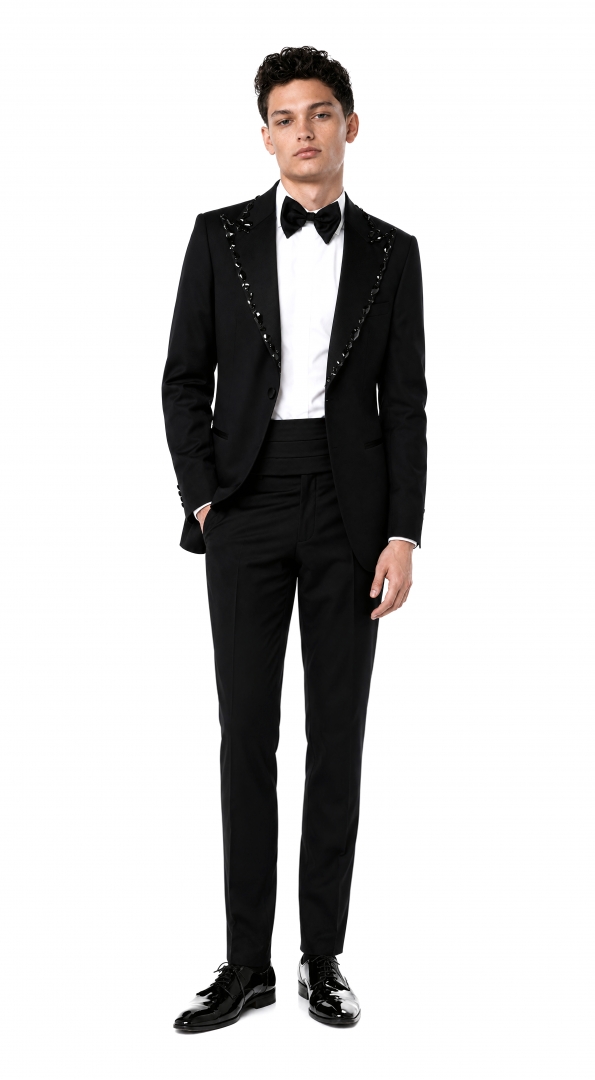
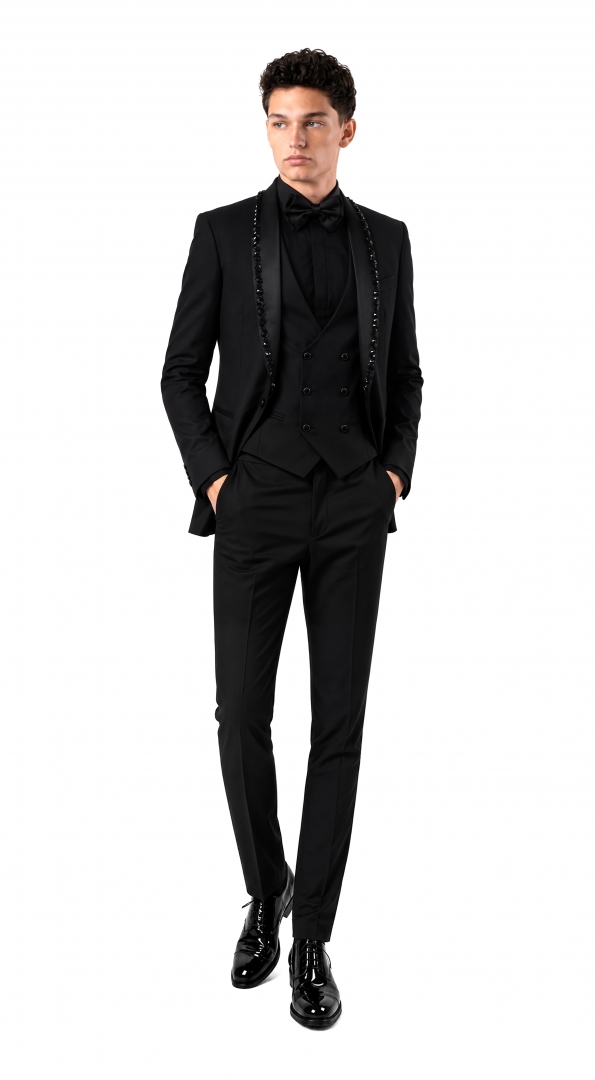
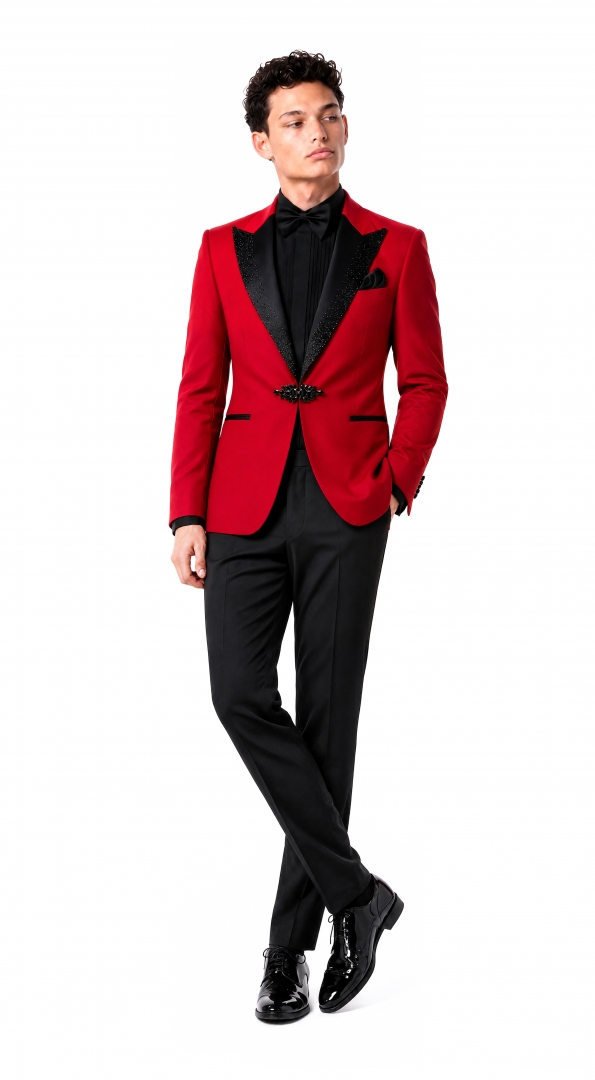
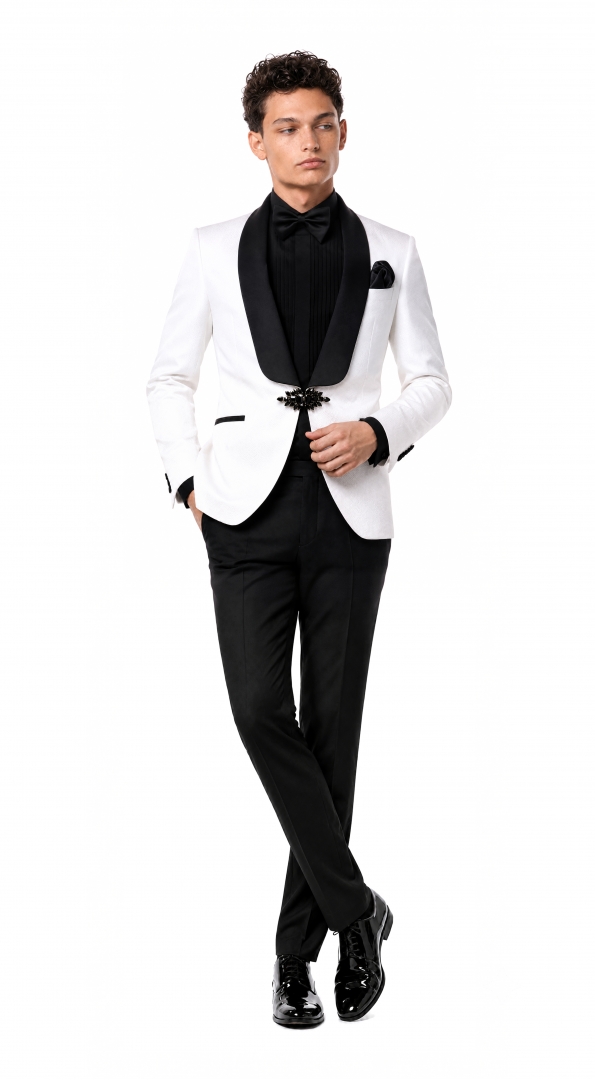
Notch lapels are versatile and widely used for business suits. Peak lapels point upward toward the shoulder and create a stronger, more formal presence. Shawl lapels form one continuous curve and are strongly associated with dinner jackets and formal eveningwear.
For ceremony suits, lapels can also be finished in contrasting satin or personalised with embroidery, crystals and other decorative elements when these details are part of a coherent design.
Pockets and vents: details that change the character of a jacket
Jetted pockets
Clean and discreet, jetted pockets are particularly appropriate for formal and evening garments because they keep the front of the jacket visually refined.
Flap pockets
Flap pockets are versatile and can be used for both business and elegant suits. Their angle and placement can be adapted to the proportions of the jacket.
Patch pockets
Patch pockets are visually more relaxed and are therefore better suited to casual jackets, softer tailoring and summer garments.
Ticket pocket
A small ticket pocket above the right side pocket is a traditional British-inspired detail that can add character to a bespoke jacket.
Jacket vents
The most common options are no vent, one centre vent or two side vents. Side vents provide excellent mobility and help the back of the jacket retain a cleaner line when the wearer sits or uses his trouser pockets.
Bespoke trousers: waist, pleats and cuffs
Waist and internal closure
Suit trousers can include an extended internal fastening system that distributes tension across the waistband and helps the trousers sit more securely. In bespoke construction, the waist and hip line are shaped for the client rather than adapted from a generic size.
Pleated or flat-front?
Flat-front trousers create a clean visual line. Pleats provide additional room through the hip and thigh and can improve comfort depending on body shape, rise and the intended silhouette.
Trouser cuffs
Cuffs add visual weight to the hem and can influence how the trousers fall over the shoe. Their width should be considered together with height, trouser opening and overall proportions.
Why fittings are essential
A client should stand naturally during measurements and fittings. The purpose is to evaluate the body as it actually behaves in everyday life, not in an artificially corrected pose.
During a fitting, the tailor checks the shoulder line, collar, chest, jacket balance, waist, sleeve length, trouser line and freedom of movement. Adjustments are made before the garment is considered complete.
Bespoke tailoring should create a clean and flattering result without making the garment unnaturally tight. Comfort, proportion and movement remain part of the final fit.
Bespoke tailoring for weddings and formal occasions
Ceremony tailoring allows a more expressive approach to fabric, lapels, embroidery, crystals and accessories while preserving the proportions and construction expected from a bespoke garment.
Frequently asked questions about bespoke suits
What is the difference between bespoke and Made to Measure?
Bespoke starts with an individual pattern developed for the client. Made to Measure generally starts from an existing base pattern that is adjusted to the customer’s measurements.
What can be personalised on a bespoke suit?
Fabric, lapels, pockets, buttons, lining, trousers, monogram, embroidery, crystals and other decorative elements can all be configured according to the design and purpose of the suit.
Which lapel is suitable for a wedding or ceremony suit?
Peak and shawl lapels are strongly associated with formal and ceremony tailoring. The best choice depends on the jacket construction, the wearer’s proportions and the overall concept of the outfit.
Does Filip Cezar offer bespoke tailoring in Bucharest?
Yes. Filip Cezar offers bespoke tailoring in Bucharest, with private atelier appointments for business suits, wedding suits and ceremony garments.
Commission your bespoke suit
Explore the Filip Cezar collections or arrange a private bespoke appointment to commission a suit shaped around your measurements, proportions and personal style.